How a Bicycle Accident Lawyer Investigates Intersection Collisions
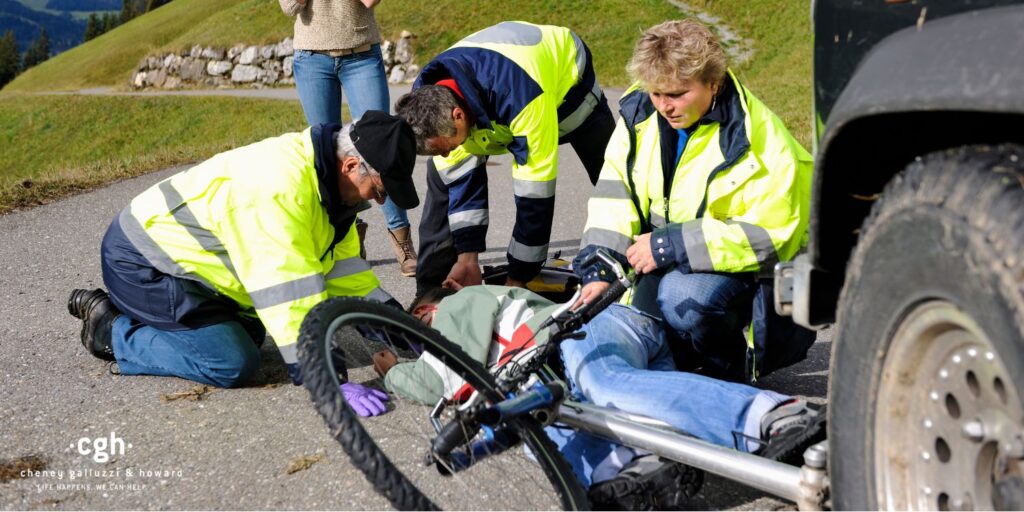
Intersection bicycle crashes rarely happen because of one simple mistake. They tend to grow out of several small failures that collide at once: a driver turns without looking through the bike lane, a signal cycle ends at the wrong moment, a delivery van blocks sight lines, worn pavement forces a rider wider into traffic, or a witness remembers only the impact and not the seconds that made it inevitable. That complexity is exactly why these cases demand careful investigation from the start.
A skilled Bicycle Accident Lawyer does much more than collect a police report and send a demand letter. Intersection cases https://brooksxbdi728.unionquill.com/posts/bicycle-accident-lawyer-faqs-every-rider-should-read often turn on timing, visibility, road design, and right of way rules that look straightforward on paper but become murky when people are injured, shaken, or trying to protect themselves from blame. The lawyer’s job is to reconstruct what happened with enough precision to show not only that a crash occurred, but why it occurred, who could have prevented it, and what evidence proves it.
That work begins early, often before the client has finished the first round of medical treatment. If the lawyer waits too long, key footage disappears, vehicles get repaired, physical marks fade, and memories harden into simplified stories that leave out crucial details. In serious intersection collisions, the first few weeks can decide whether the claim rests on hard evidence or competing narratives.
Why intersection bicycle crashes are investigated differently
A rear-end collision on a straight road may raise fewer factual disputes than a bicycle crash in an intersection. Intersections are controlled spaces, but they are also dense with moving parts. There may be left-turn arrows, permissive turns, crosswalk phases, bike boxes, dedicated signals, stop bars, curbside parking, rideshare pickups, and a mix of commuters, pedestrians, buses, and commercial traffic. Each element can change the legal analysis.
Take a common scenario: a driver turns right across a cyclist’s path. The driver may insist the cyclist “came out of nowhere.” The cyclist may say they were riding predictably in the bike lane with a green light. Both can believe their version. The investigation has to answer more specific questions. Was there a bike lane, and if so, was it solid or dashed near the intersection? Did the cyclist have a bicycle-specific signal? Did the driver stop ahead of the crosswalk, inside it, or beyond it? Was the rider visible for three seconds, five seconds, or longer? Was a parked truck screening the rider until the final moment? Those are not abstract details. They often determine liability.
A Bicycle Accident Lawyer who regularly handles intersection cases knows that the answer is rarely sitting neatly inside the crash report. Police officers do important work, but they usually arrive after the event. They may not canvass every business for video, measure skid marks, inspect signal timing logs, or preserve app data from a driver making deliveries. Lawyers do.
The first pass, locking down perishable evidence
The first stage of the investigation is preservation. This is less glamorous than courtroom argument, but it often matters more. Surveillance footage can be overwritten within days. Event data from newer vehicles may become harder to access after repairs. Damage patterns change once a bicycle is moved, and roadway debris disappears after street cleaning or weather.
An experienced lawyer quickly identifies what could vanish and sends preservation notices to the right people and entities. That may include the driver, the driver’s insurer, a commercial employer, a rideshare company, nearby stores, a city transportation department, or a property owner with exterior cameras aimed toward the street. In urban corridors, one intersection can be visible from a bank, a coffee shop, an apartment entry system, a transit bus, and a traffic camera. Many clients are surprised by how much footage exists, and equally surprised by how fast it can disappear if no one asks for it.
The lawyer will also try to document the bicycle and helmet before repairs or disposal. Scrape patterns on the frame, a bent wheel, pedal strikes, damage to lights, torn clothing, and impact marks on a helmet can help show angle, speed, and point of contact. A driver who claims the cyclist struck the side of the car may face a different story if vehicle damage shows a front-corner impact during a turning movement. That kind of physical evidence can cut through finger-pointing.
In one type of case that appears often, a rider is hit by a left-turning driver who says the bicycle ran a red light. The lawyer’s team may visit the scene and photograph the approach from the cyclist’s perspective at the same time of day. If the sun was low and directly in the driver’s view, that affects visibility. If there is a stagger between the pedestrian walk signal and the opposing left-turn phase, that timing matters too. The earliest steps are about freezing the scene before the world moves on.
Reading the crash scene like a map of decisions
A good investigation is not just evidence collection. It is interpretation. The scene itself can reveal the choices each road user made in the final seconds before impact.
Lawyers and their investigators often examine lane widths, curb radii, signal placement, pavement markings, parking restrictions, sight obstructions, drainage grates, potholes, and the exact geometry of the intersection. A broad sweeping right-turn lane encourages faster turns than a tighter corner. A faded bike lane can weaken a driver’s claim that they were unaware cyclists traveled there, but it may also raise questions about roadway maintenance and design. A large SUV stopped too far forward can block the view of a rider entering lawfully on a green.
Measurements matter. How far was the cyclist from the stop bar when the light changed? How much distance did the driver cover between initiating the turn and the impact point? Were there yaw marks, tire scuffs, or debris fields that help place the collision more accurately than the police diagram? Even a few feet can matter when the defense argues the rider was outside the bike lane or traveling unpredictably.
This is where experienced judgment counts. Not every mark on pavement means something. Not every bent spoke is probative. A lawyer who has investigated many bicycle cases learns to separate noise from the few details that genuinely move the analysis.
Witnesses rarely agree, and that is normal
Clients often expect witnesses to settle everything. Sometimes they do. More often, they add pieces that need to be fitted together carefully. A pedestrian may remember the vehicle turning but not the signal color. A driver behind the striking car may recall the cyclist’s bright jacket but not whether the rider was in the lane or crosswalk. Someone waiting for a bus may hear the horn and brakes but never see the first movement.
A strong Bicycle Accident Lawyer interviews witnesses early, before memory compresses the event into a simple headline. The best witness interviews do not just ask, “Who had the green light?” They dig into position, angle, timing, distractions, and confidence. Where were you standing? What direction were you facing? What first caught your attention? Could you see the bike lane continuously or only after the car began to turn? How certain are you about that detail?
That last question matters more than many people realize. Human memory is not a video recording. It is reconstructive. A careful lawyer does not overstate a witness whose certainty exceeds what their vantage point could support. In negotiation and at trial, credibility matters. Overplaying a weak witness can damage a strong case.
Sometimes the most useful witness is not the person who saw impact, but the person who saw the thirty seconds before impact. That might be another cyclist who noticed the driver inching through the crosswalk while looking left for vehicle traffic and never once checking right for a rider in the bike lane. It might be a pedestrian who saw a delivery driver handling a phone at the red light. Those details go to attentiveness, not just fault.
Technology has changed these cases
Ten years ago, many intersection claims rose or fell on testimony and the police report. Today, digital evidence often carries the case.
Video is the obvious source. Helmet cameras, handlebar cameras, dashcams, bus footage, storefront systems, and residential doorbell cameras can show the incident from multiple angles. But there are less obvious sources too. Smartphones can preserve timestamps, location history, calls, text activity, and fitness app data. Electronic bike computers may log speed and route. Some vehicles store pre-crash data that can show braking, steering input, and speed changes in the moments before impact.
Digital evidence is powerful, but it has to be handled carefully. A speed reading from a cycling app may be approximate rather than exact. GPS can drift in dense urban corridors. A timestamp on one system may not match another to the second. Lawyers who understand the strengths and limits of these tools use them to corroborate, not oversell.
Commercial and gig-economy cases add another layer. If the driver was delivering food, transporting passengers, or driving a company vehicle, the lawyer will examine app status, dispatch records, work schedules, internal safety policies, and whether the driver was rushing to meet delivery targets. A crash that first appears to involve only an individual motorist can expand into a case involving employer responsibility or larger insurance coverage.
The police report is a starting point, not the final word
Many injured cyclists are discouraged when they read a report that seems unfavorable or incomplete. Maybe the officer cited the cyclist. Maybe the narrative says the bike “entered traffic” without explaining the lane configuration. Maybe the report omits a witness or misidentifies the point of impact. That is frustrating, but it is not the end of the case.
Police reports are often built under time pressure, with limited access to video and no opportunity for the kind of detailed reconstruction a civil investigation can provide. Lawyers regularly challenge or contextualize report conclusions with photos, signal records, expert analysis, medical evidence, and witness statements.
That does not mean the report is irrelevant. Quite the opposite. It can contain admissions, diagrams, insurance information, body-worn camera references, and early accounts that differ from later defense positions. A driver who told police, “I never saw the cyclist,” may later argue the cyclist was swerving. That shift matters. The report becomes one piece of a larger mosaic.
Medical evidence is part of liability, not just damages
People often think medical records matter only for valuing the injury. In bicycle intersection cases, they can also illuminate how the crash happened. The location of fractures, abrasions, soft tissue trauma, and head injuries may align with a turning movement, a side impact, or a hood-and-windshield projection. A hand injury may suggest the rider instinctively braced during a lateral strike. Rib fractures on one side can be consistent with the vehicle’s point of contact. None of this replaces engineering analysis, but it can support it.
Timing matters here too. If a rider refuses ambulance transport, goes home, and seeks care the next day, insurance adjusters often try to minimize the event. A lawyer looks at the full context. Cyclists frequently experience adrenaline, shock, embarrassment, or confusion immediately after a crash. Delayed treatment does not automatically mean minor injury. But the records must be gathered and explained clearly.
An experienced Bicycle Accident Lawyer also watches for injuries that are underdiagnosed early, particularly concussions, shoulder damage, wrist fractures, and knee trauma. In intersection collisions, a rider may strike the vehicle, pavement, or both. The injury pattern is rarely as simple as one impact point.
Signal timing, right of way, and the hidden importance of municipal records
One of the most overlooked parts of intersection investigation is obtaining records from the public entities that design and control the crossing. Signal timing plans, maintenance logs, complaint histories, lane-striping plans, construction records, and collision histories can all be relevant.
Suppose a cyclist is hit while proceeding straight as a driver turns right on green. If the city installed a bike lane that carries riders up the curbside and then allows high-speed right turns with little merge space, the geometry itself may contribute to repeated conflict. That does not automatically create a claim against a municipality. Public entity cases are difficult, often restricted by notice rules, immunities, and short deadlines. But a thorough lawyer investigates the possibility instead of assuming the driver is the only actor worth examining.
Signal timing records can also resolve disputes. If there is an all-red clearance interval, a leading pedestrian interval, or a bicycle-only phase, those details may support the cyclist’s account. Maintenance logs may reveal a malfunctioning detection system that failed to trigger a bike signal. In some jurisdictions, proving that a city had notice of a dangerous condition requires records and prior complaints, not just photographs after the fact.
These cases involve judgment. Suing a public entity can complicate and lengthen the matter. Sometimes the stronger path is to focus on the motorist and insurer. Other times, road design is too central to ignore.
Experts enter when the facts need translation
Not every bicycle case needs experts, but many serious intersection collisions do. The role of an expert is not to manufacture complexity. It is to explain technical issues clearly enough for adjusters, mediators, judges, or juries to understand them.
Accident reconstructionists analyze speeds, distances, perception-reaction time, sight lines, and vehicle movements. Human factors experts may address what a reasonably attentive driver could and should have seen. Biomechanical specialists sometimes help explain injury mechanisms, though their role varies by case and jurisdiction. Roadway design experts may discuss whether the intersection layout created foreseeable conflict between turning vehicles and through-moving cyclists.
The best lawyers bring in experts thoughtfully. If liability is obvious on clean video, a stack of experts may add cost without adding value. If the defense claims the rider was invisible, traveling too fast, or outside the proper path, expert work may become essential. Good lawyering includes knowing when technical proof will sharpen the narrative and when it will simply overcomplicate it.
Comparative fault is almost always raised
Even when the driver made the critical mistake, insurers commonly argue that the cyclist shares blame. They may point to speed, lane position, dark clothing, failure to use lights, earbuds, failure to wear a helmet, or the rider’s choice to pass traffic on the right. Some of those issues carry legal significance. Some are red herrings. The investigation has to sort them out without defensiveness.
For example, helmet use may matter to injury arguments in some jurisdictions, but it does not excuse a driver who turned across a cyclist’s lawful path. A rider’s speed can matter, but only if there is evidence for it and if it actually changed the avoidance analysis. Earbuds may sound persuasive to a jury, yet have no proven connection to the collision if the issue was visual inattention by the driver.
A seasoned Bicycle Accident Lawyer does not wait for these arguments to surface in litigation. The lawyer anticipates them and tests them against the evidence early. If the client lacked front and rear lights at dusk, that needs honest evaluation. If the rider was filtering forward beside stopped cars before entering the intersection, that needs careful treatment too. Strong advocacy is not pretending difficult facts do not exist. It is putting them in their proper legal and factual context.
The client interview often uncovers the lead others miss
Some of the most valuable facts come not from official records but from patient conversation with the injured rider. People who have been hit at an intersection often remember fragments at first: the color of a hood, the sound of brakes, a hand gesture, a turn signal that never flashed. As pain and shock recede, more detail returns.
A good lawyer asks practical questions that are easy to overlook. What route do you usually take through that intersection? Was there construction that day? Did you move left to avoid a pothole or opening car door before reaching the crossing? Did you notice whether the driver rolled forward while looking away from you? Were you tracking your ride? Did anyone approach you afterward saying they saw everything? Did you use transit or rideshare later that day, creating a digital timestamp that helps place the timeline?
This is one reason experienced lawyers prefer to speak with clients in depth rather than relying only on forms. Cases are built on human detail. A rider may casually mention that a bus was stopped on the far corner, which leads to a transit video request. Or they may remember that the same intersection had a near miss the week before, which prompts a search for nearby business employees who have seen repeated conflicts.
Investigation shapes settlement value long before trial
People often imagine investigation as something done for the courtroom. In practice, it usually matters most in negotiation. Insurers pay more attention when a claim arrives fully documented, internally consistent, and ready for litigation. They are less likely to dismiss a cyclist’s account when they see preserved video, witness statements, signal plans, scene measurements, and a coherent explanation of why the driver’s conduct caused the injury.
A thin file invites low offers. A robust file changes leverage. It signals that the lawyer understands bicycle dynamics, intersection law, and the evidentiary pressure points that make defenses collapse. That affects not just liability discussions, but how seriously the insurer treats medical damages, future care, lost income, and pain claims.
There is also a practical side. Early investigation can identify additional insurance coverage, from commercial policies to employer policies to umbrella policies. In serious injury cases, coverage questions are not secondary. They shape strategy from the beginning.
What separates a routine file from a persuasive case
Two lawyers can have the same police report and the same medical records, yet produce very different outcomes. The difference is usually in the quality of the investigation and the ability to connect facts into a believable, specific narrative.
A persuasive intersection case explains the sequence cleanly. The cyclist approached lawfully in a visible path. The driver had a duty to yield before crossing that path. The physical evidence, digital records, and witness accounts align with that sequence. Any alleged cyclist fault is either unsupported or not causative. The injuries match the mechanics of the crash. The result is not a stack of documents, but a story anchored in proof.
That level of work takes time, skepticism, and experience. It means checking the timing diagram instead of assuming the signal worked a certain way. It means visiting the intersection instead of relying on online maps. It means asking whether the delivery driver was on the clock, whether a city camera records over itself every 72 hours, whether the “independent witness” was actually a passenger in the defendant’s car, and whether the scrape on the bicycle frame matches the height of the vehicle’s bumper.
Intersection bicycle cases reward that kind of discipline. They punish shortcuts. When a Bicycle Accident Lawyer investigates them properly, the claim becomes far more than a dispute over who says what happened. It becomes a reconstruction of choices, conditions, and consequences, grounded in the evidence that survives the crash.
CGH Injury Lawyers
2701 Lawrence St Suite 201
Denver, CO 80205, United States
Phone: +1 720-669-8062
FAQ About Bicycle Accident Lawyer
Who is at fault if a car hits a bicycle?
Fault depends on the evidence and the traffic rules that applied to the collision. A driver, cyclist, or another party may share responsibility. Police reports, witness accounts, video, and the physical evidence can help establish what happened. A collision with a car does not automatically determine legal fault.
Can you sue someone for hitting you on a bike?
You may have a claim when another person's negligent conduct causes your injuries and losses. The available evidence, applicable deadlines, insurance coverage, and any shared fault affect your options. A lawyer can review the circumstances and explain whether an insurance claim or lawsuit is appropriate; compensation is not guaranteed.
What percentage does an injury lawyer usually take?
There is no single percentage that applies to every injury case. Many lawyers use a contingency fee based on a share of the recovery, with the terms stated in a written agreement. Ask how the percentage is calculated, whether it changes during litigation, and how case expenses are handled before signing.